
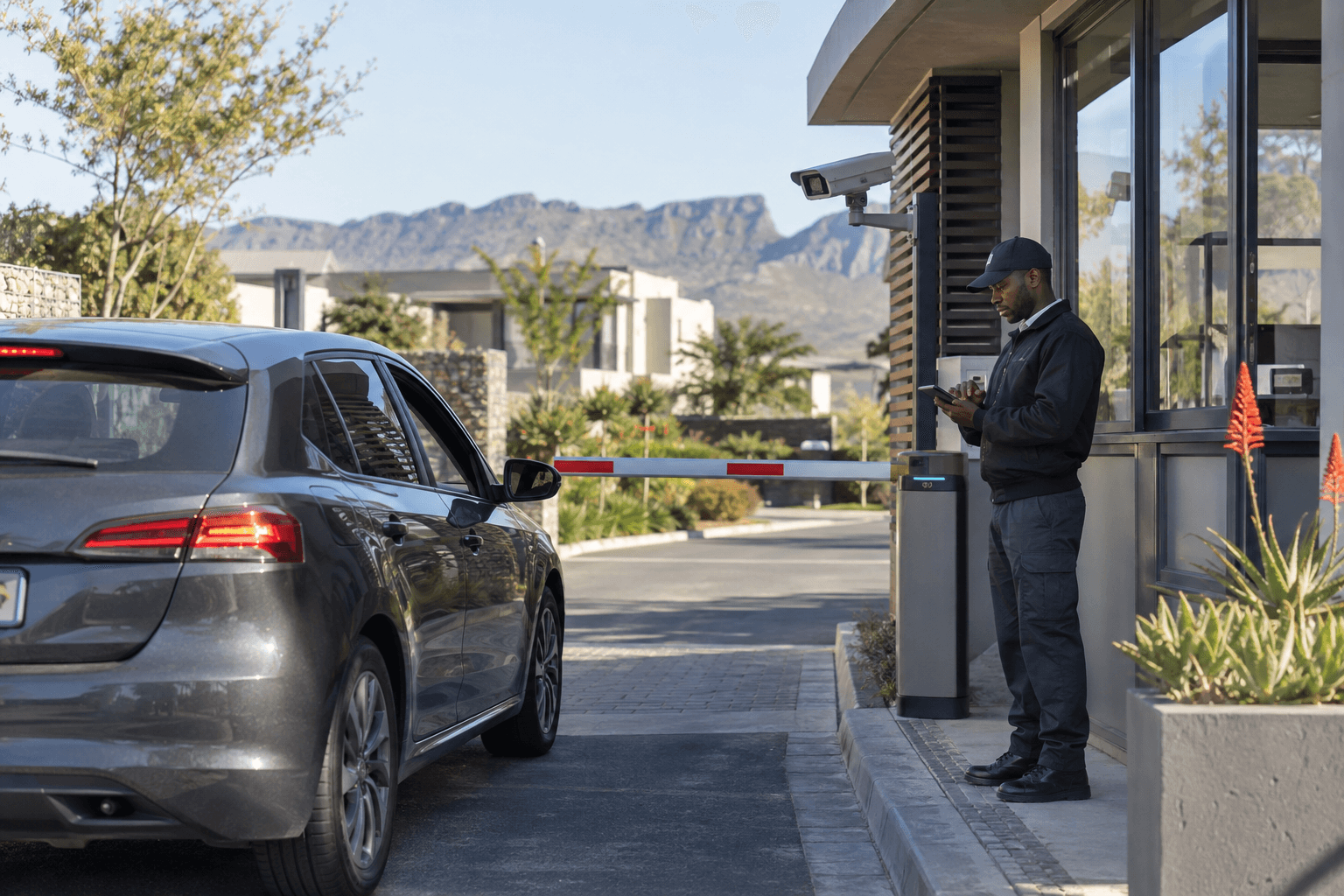
Licence plate recognition improves estate access control by identifying approaching vehicles automatically, checking plate numbers against configured access records and creating a searchable history of vehicle movement. Used alongside visitor scanning and a clear gate procedure, it can make entry faster for authorised vehicles while giving security teams better information when a vehicle needs attention.
What is licence plate recognition?
Licence plate recognition, commonly shortened to LPR, is a camera-based system that reads a vehicle's registration plate as it approaches an entrance or exit. The software converts the plate image into a plate number that can be compared with authorised, expected or flagged vehicle records.
LPR is also sometimes called automatic number plate recognition, or ANPR. The two terms generally describe the same type of technology: a camera and software working together to identify a vehicle by its registration plate.
How does LPR work at an estate entrance?
An LPR access-control process usually follows five steps:
- The camera captures the vehicle. A dedicated camera is positioned to obtain a clear view of the plate as the vehicle enters the lane.
- The software reads the plate number. Image-processing software converts the visible characters into searchable data.
- The system checks the record. The plate number is compared with the estate's configured list of authorised, expected or flagged vehicles.
- The access rule is applied. An authorised vehicle may trigger an automated boom or gate, while an unknown or flagged vehicle can be referred to a guard for verification.
- The movement is recorded. The system stores the access event so authorised managers can review vehicle activity and reporting.
The exact workflow should match the estate's access policy. Automation can be useful for routine entries, but exceptions still need a clear human verification process.
What are the main benefits of LPR for residential estates?
Faster access for authorised vehicles
Residents, approved staff and other regular users do not always need to repeat a manual check when their vehicle is already authorised. Recognising the plate as the vehicle approaches can reduce routine processing and help keep a busy entrance moving.
More consistent vehicle identification
A handwritten registration number can be incomplete, difficult to read or entered incorrectly. Automated plate recognition creates a standardised record that is easier to search and compare, although guards should still have a process for dirty, damaged, obscured or unreadable plates.
A clearer record of vehicle movement
Digital access records can help authorised managers establish which vehicle used an entrance and when the event occurred. This provides useful context for access reviews, incident investigations and day-to-day operational reporting.
Earlier awareness of vehicles requiring attention
If a detected plate matches a properly governed watchlist or exception record, the system can notify the security team so the estate's approved procedure can be followed. The alert supports the guard's decision; it does not decide by itself whether a person is a security risk.
Less dependence on memory
Gate teams change shifts, and larger estates may operate more than one entrance. A central vehicle record helps authorised guards work from the same information instead of relying on one person's memory or a note in a paper book.
Does licence plate recognition replace visitor management?
No. LPR identifies a vehicle, not necessarily the driver, passengers or purpose of the visit. A plate may be linked to a regular resident today and used by another authorised driver tomorrow. A visitor may also arrive in a hired, replacement or different vehicle.
For that reason, LPR works best as one layer in a broader access process. Visitor document scanning, host confirmation, access permissions and vehicle recognition answer different questions. Together they can establish who is arriving, which vehicle is being used, why access is requested and what action the guard should take.
Can LPR open a gate automatically?
Yes. An LPR system can be configured to trigger a gate or boom when it recognises an authorised plate. Estates should decide which vehicle categories qualify for automatic access and which must still be checked by a guard.
For example, an estate may automate entry for approved resident vehicles while requiring visitors, contractors and delivery drivers to complete the normal visitor process. A manual fallback is also important when a plate cannot be read or the system is unavailable.
What should an estate plan before installing LPR?
A reliable installation depends on more than selecting a camera. Estate managers should plan for:
- Camera position: the viewing angle, distance and mounting height should suit the lane.
- Lighting: plates must remain readable in bright sunlight, shadow and low-light conditions.
- Traffic flow: the capture point should allow safe vehicle movement without creating confusion at the boom.
- Access rules: the estate must define which records can trigger automatic access, an alert or a manual check.
- Exception handling: guards need a documented process for unreadable plates, changed vehicles and disputed records.
- Data governance: access to vehicle records, retention periods and authorised uses should be clearly defined.
- Maintenance: lenses, lighting, network connections and integrations should be checked regularly.
How does Identiscan support vehicle access control?
Identiscan's licence plate recognition solution can read vehicle plate numbers and support automated access for authorised vehicles. The system also supports access reporting and configured notifications for vehicles that require attention.
When vehicle recognition is used with the MT93 mobile visitor-identification device and central management tools, security teams can combine vehicle information with the estate's wider visitor access process instead of managing separate paper records.
Frequently asked questions about licence plate recognition
Will LPR read every licence plate?
No system will read every plate in every condition. Dirt, damage, glare, poor lighting, unusual angles and obstructions can affect recognition. Correct installation and a manual exception process are therefore essential.
Can LPR identify the person driving?
No. LPR identifies the visible registration plate. The driver's identity should be verified through the appropriate visitor or resident access process when required.
Is LPR useful only for residential estates?
No. Office parks, industrial sites, campuses, parking facilities and other controlled properties can also use LPR where vehicle identification supports their access policy.
What happens when a resident changes vehicles?
An authorised administrator should update the vehicle record according to the estate's approval process. Old or temporary vehicle permissions should be reviewed so the active list remains accurate.
A stronger gate process starts with connected information
Licence plate recognition can make routine vehicle access quicker, records clearer and exceptions easier to identify. Its greatest value comes from using that information within a well-defined security process rather than treating the camera as a complete solution on its own.
Estates considering LPR should begin with their access rules, traffic patterns and reporting needs. Identiscan can then help connect vehicle recognition, visitor processing and central oversight in one practical access-control workflow. Book a demonstration to see how the system can fit your entrance.